
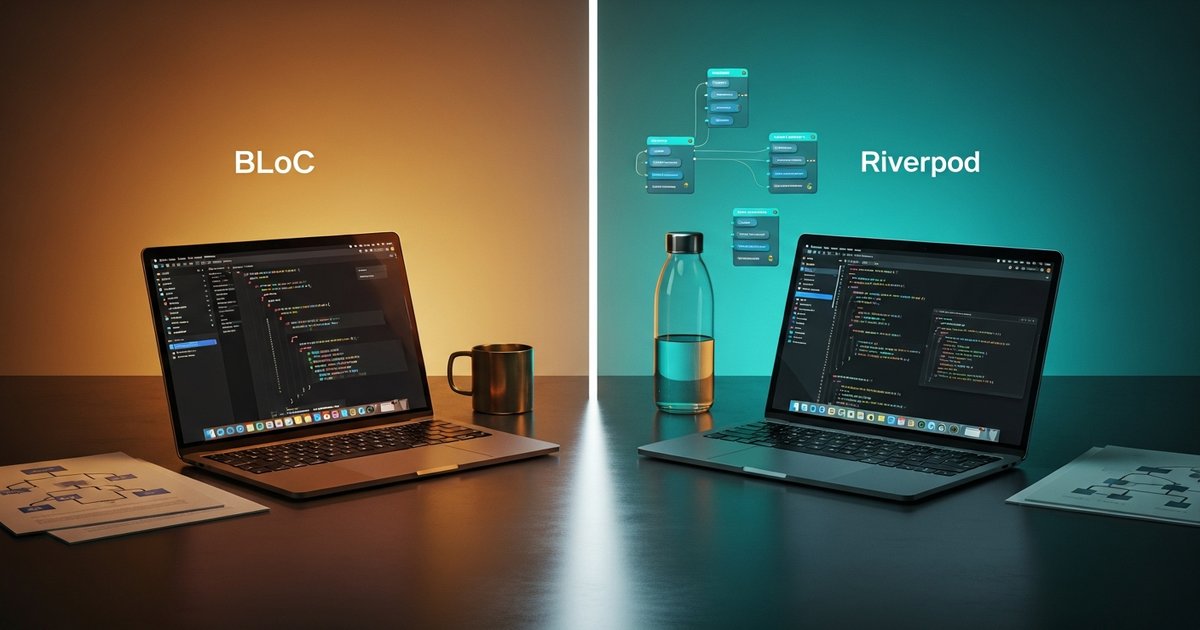
In 2026, Flutter state management remains one of the most debated topics among developers, with BLoC and Riverpod emerging as the top contenders. According to recent surveys, 78% of Flutter developers have used at least one of these solutions in production apps, yet choosing between them can still be challenging. As apps grow more complex and user expectations rise, selecting the right state management approach has never been more critical.
BLoC vs Riverpod: Understanding the Core Differences
At their core, both BLoC (Business Logic Component) and Riverpod aim to manage app state effectively, but they take fundamentally different approaches. BLoC relies on streams and events, while Riverpod focuses on providers and dependency injection. Here's a quick breakdown:
        // BLoC Example
        class CounterBloc extends Bloc<CounterEvent, int> {
          CounterBloc() : super(0);

          @override
          Stream<int> mapEventToState(CounterEvent event) async* {
            if (event is IncrementEvent) {
              yield state + 1;
            }
          }
        }

        // Riverpod Example
        final counterProvider = StateProvider<int>((ref) => 0);

        class CounterWidget extends ConsumerWidget {
          @override
          Widget build(BuildContext context, WidgetRef ref) {
            final count = ref.watch(counterProvider);
            return Text('Count: $count');
          }
        }
💡 Key Insight
BLoC excels in complex event-driven scenarios, while Riverpod shines in simpler dependency management use cases. Choose based on your app's architecture needs.
When to Use BLoC in Your Flutter App
BLoC is particularly powerful in scenarios where:
- You need strict separation between UI and business logic
- Your app handles complex state transitions
- You require precise control over asynchronous data streams
        // Advanced BLoC Example with Streams
        class WeatherBloc extends Bloc<WeatherEvent, WeatherState> {
          final WeatherRepository repository;

          WeatherBloc(this.repository) : super(WeatherInitial());

          @override
          Stream<WeatherState> mapEventToState(WeatherEvent event) async* {
            if (event is FetchWeather) {
              yield WeatherLoading();
              try {
                final weather = await repository.getWeather(event.city);
                yield WeatherLoaded(weather);
              } catch (e) {
                yield WeatherError(e.toString());
              }
            }
          }
        }
When Riverpod Makes More Sense
Riverpod is ideal when:
- You want a simpler, more intuitive API
- Your app has many dependencies that need managing
- You value compile-time safety over runtime errors
        // Riverpod Dependency Injection Example
        final apiClientProvider = Provider<ApiClient>((ref) => ApiClient());
        final userRepositoryProvider = Provider<UserRepository>((ref) {
          return UserRepository(ref.watch(apiClientProvider));
        });
Common Pitfalls When Using BLoC and Riverpod
Even experienced developers can stumble when implementing these solutions:
- Overcomplicating BLoC: Creating too many BLoCs for simple state
- Riverpod Overuse: Using providers for everything instead of combining with simpler solutions
- State Duplication: Maintaining the same state in multiple places
- Testing Neglect: Not writing proper unit tests for state management
⚠️ Warning
Always profile your app's performance when implementing state management. Excessive rebuilds can lead to janky UI.
Performance Considerations and Best Practices
When choosing between BLoC and Riverpod, consider these performance factors:
- BLoC can have higher memory overhead due to stream controllers
- Riverpod's provider tree can become complex in large apps
- Both solutions benefit from proper state persistence strategies
        // BLoC Performance Optimization
        class OptimizedBloc extends Bloc<MyEvent, MyState> {
          final _subscriptions = CompositeSubscription();

          @override
          Future<void> close() {
            _subscriptions.dispose();
            return super.close();
          }
        }

        // Riverpod Performance Tip
        final expensiveProvider = Provider.autoDispose<ExpensiveService>((ref) {
          final service = ExpensiveService();
          ref.onDispose(() => service.dispose());
          return service;
        });
Key Takeaways: BLoC vs Riverpod in 2026
- BLoC remains strong for complex, event-driven architectures
- Riverpod offers simpler syntax and better dependency management
- Consider combining both approaches for different parts of your app
- Always profile performance before finalizing your state management choice
- Stay updated with the latest versions as both libraries continue to evolve
🚀 What's Next?
Ready to implement BLoC or Riverpod in your Flutter project? Explore our advanced state management patterns or contact our team for personalized consulting on your app architecture.
Frequently Asked Questions
How does BLoC compare to Riverpod for Flutter state management?
BLoC uses a reactive programming pattern with streams and sinks, while Riverpod offers a more flexible and compile-safe dependency injection system. Riverpod simplifies state management with less boilerplate compared to BLoC.
What are the key advantages of Riverpod over BLoC in 2026?
Riverpod provides better scalability, compile-time safety, and easier testing due to its provider-based approach. It also eliminates the need for complex event handling, unlike BLoC.
Why might a developer choose BLoC instead of Riverpod?
BLoC is ideal for complex applications requiring strict separation of business logic and UI. It’s also well-documented and widely adopted in legacy Flutter projects.
Can BLoC and Riverpod be used together in a Flutter app?
Yes, but it’s generally unnecessary as Riverpod can handle most use cases alone. Combining them may add complexity unless migrating from BLoC to Riverpod incrementally.